
They Bombed the Monastery: Will the World Awaken?
October 31, 2026

After the bombing of Mahasi Sayadaw’s home monastery in Burma’s Sagaing region, the world’s Buddhist, mindfulness, and insight meditation communities must join forces for Burma’s freedom
A personal reflection by Alan Clements
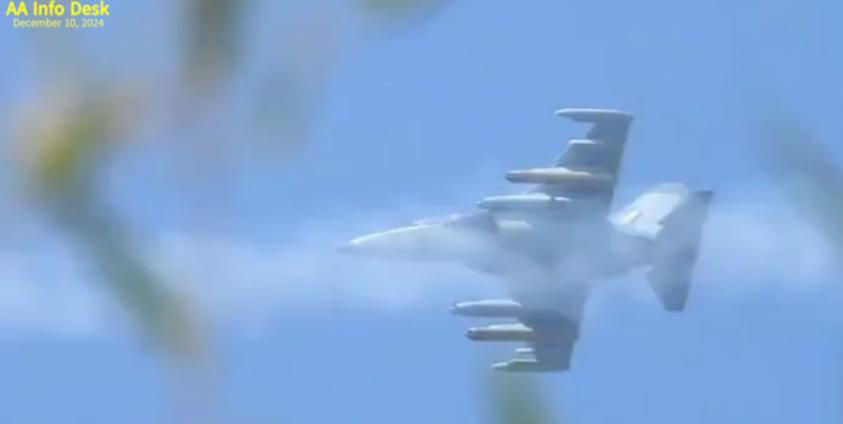
On a sacred Buddhist observance day marking the new moon of October 2026, Myanmar’s military bombed the home monastery of the Venerable Mahasi Sayadaw in Seikkhun, in Burma’s Sagaing Region, killing at least two civilians and wounding others. The bombs damaged the Dhamma hall, meditation facilities, and religious buildings of a sanctuary where people had gathered to practice harmlessness and escape the violence consuming their country. Later that afternoon, according to accounts gathered by Insight Myanmar, drones attacked the compound again. People had fled to a monastery to stay alive. They were killed there.
Almost fifty years earlier, I arrived at that monastery with a question about how to live.
It was March 1977, my first visit to Burma. I had come with Joseph Goldstein, Jack Kornfield, Steven Smith, Mark Epstein, Roger Milliken, and others, and my beloved partner at the time, Catherine Ingram. I remember our truckload of Westerners arriving to meet this revered monk. I remember him giving a Dhamma talk to the people gathered there. Whether we were the first Western practitioners to visit, I cannot say. What I remember most intimately is the aspiration that brought me.
In Florida, in 1971, I had read Mahasi Sayadaw’s practical instructions on vipassana meditation. Their clarity changed my life. Here was an invitation to examine consciousness directly—to look, to feel, to know what contracts our inner being and what allows it to become free. Fear could be understood. Hatred could be understood. The movements of craving, generosity, tenderness, and awareness could be encountered within the immediacy of living.
For six years, I had wanted to meet the person who offered this extraordinary invitation. When the opportunity came, I asked whether I could ordain as a monk, remain under his guidance, and devote myself to intensive satipaṭṭhāna vipassana (insight) meditation. As I remember his answer, he explained that my visa allowed only one week. It could not be extended. We lived under dictatorship.
I heard those words without understanding the world they contained. Now, in late October 2026, their meaning reaches me through the bombing of the place where he spoke them.
Mahasi Sayadaw was among the most influential Buddhist teachers of the twentieth century. At the Sixth Great Buddhist Council, held in Rangoon from 1954 to 1956, he served as Questioner and Final Editor. Alongside Mingun Sayadaw, who answered the questions concerning the teachings, he occupied a central role in preserving the Theravada tradition. His authority joined profound scholarship with the disciplined investigation of experience.
Through his students and the generations, they taught, that inheritance traveled across continents. Its influence lives in Buddhist monasteries, insight meditation centers, mindfulness communities, and innumerable private lives. For me, it opened an embodied understanding of consciousness: the intimacy of sensation and awareness, intention and consequence, the qualities of mind through which we either deepen suffering or participate in its release.
Today, the global Buddhist, mindfulness, and insight meditation communities are being called into a profound expression of that understanding. The people who helped preserve and transmit these teachings are enduring a national catastrophe. Our relationship with them continues beyond the meditation hall. What form will our gratitude take when their homes are destroyed and their families driven into flight?
More than four million people are internally displaced, and more than sixteen million need humanitarian assistance. Behind those numbers are the disintegration of ordinary life and the relentless work of surviving its loss. Villages have been destroyed. Airstrikes and shelling have struck civilian communities, displacement sites, and health facilities. Families face hunger, interrupted medical care, forced recruitment, arbitrary arrest, and torture. Rohingya communities continue to endure persecution and deprivation. Refugees who escape across borders face insecurity and the danger of forced return.
Consider what it means to lose the place where your life makes sense: the home where your children sleep, the school that gives their days continuity, the clinic that keeps a parent alive, the monastery where grief can be spoken and food sometimes found. Displacement is the breaking of these relationships. Repeated displacement is having to gather the remnants and begin again, with fewer resources and another layer of fear. The bombing of sanctuary carries a terrible question into every refuge: will we have to run from here, too?
At Seikkhun, people had gathered for Uposatha, a sacred observance devoted to ethical restraint and spiritual practice. Others were sheltering from the conflict. Bombs struck a community seeking protection and cultivating peace. The devastation reaches into the meaning of sanctuary itself.
Imagine the international response to the bombing of the Vatican or a sanctuary intimately associated with the Dalai Lama. These comparisons help convey the spiritual significance of Mahasi Sayadaw’s home monastery. Yet the people killed there required no association with a great teacher to make their lives sacred. Their humanity was enough. Our recognition of the monastery should bring us closer to every unnamed village enduring the same violence.
My reverence for Mahasi Sayadaw is inseparable from my gratitude to Sayadaw U Pandita, his successor and my Dhamma teacher. My understanding also deepened through Daw Aung San Suu Kyi, U Tin Oo, and U Kyi Maung. Through them, the revolution of the spirit became a living responsibility: metta as active loving-kindness, karuna as compassion willing to respond, nonviolence as courage, and right speech as truth offered in the service of life.
Daw Aung San Suu Kyi told me of attending the Mahasi meditation center in Rangoon in her twenties, and of the help she later received from U Pandita’s teachings during house arrest. Today, at eighty-one, she remains deprived of her freedom. Thousands of other political prisoners remain confined, their suffering often hidden from international attention. Our demand for her release must carry their names and their humanity with it.
What does liberation ask of those of us who can speak freely? What does mindfulness become when it includes the conditions under which other people must draw their next breath? The consciousness we investigate is also the consciousness through which we respond—or become accustomed to looking away. We can bring awareness to that moment of withdrawal. We can feel the helplessness without allowing it to decide the limits of our responsibility.
Many Burmese people and international supporters already live this commitment with extraordinary courage. Let us strengthen their work through a coordinated alliance of Buddhist, mindfulness, and insight meditation communities. Let our institutions join forces across traditions, countries, and teaching lineages, guided by the people whose lives are at stake.
Our first commitment should be a shared international gathering for Burma: a day of teachings, public testimony, vigils, and nonviolent demonstrations, organized with Burmese communities and followed by continuing action. Let people hear directly from those living through displacement and those sustaining humanitarian work. Let every participating institution leave with a responsibility it has agreed to carry.
Our second commitment should be sustained support for Burmese-led relief. Meditation centers and Buddhist organizations can establish recurring contributions, support displaced families and prisoners’ relatives, and help independent journalists continue reporting. Compassion becomes tangible when it helps someone eat, receive care, or remain connected to the world.
Our third commitment should be a common public campaign for civilian protection and the release of political prisoners. Press governments to restrict the military’s access to weapons, aviation fuel, and revenue while safeguarding humanitarian assistance. Demand protection for refugees, access to detainees, and accountability for atrocities. Ask ASEAN to make the protection of human beings central to its diplomacy.
Maya Angelou’s Still I Rise gives voice to a dignity that oppression cannot extinguish: “But still, like dust, I’ll rise.” Rooted in Black experience, her words reach across borders and find an answering courage in people struggling for freedom everywhere. I hear that courage in Burma.
In words widely attributed to Rumi, “If all you can do is crawl, start crawling.” Begin with the capacity you have. Help one family, organize one gathering, sustain one commitment, and invite others to join you. Let prejudice yield to encounter. Let solidarity embrace every ethnicity and religion. Let our concern become dependable enough that someone living through this nightmare can feel its presence.
Nearly half a century ago, in 1979, after helping invite Mahasi Sayadaw and other monks to America to teach, I asked him whether I could return with him to Burma and become a monk. He encouraged me to ordain then and there in New York; once we reached Burma, we could petition the regime for permission to stay. That is what we did.
I became one of the first Americans permitted under the dictatorship to live and practice under his guidance, only to be expelled several years later by the very dictator who had allowed me to remain. The man is gone, but a succession of dictators has carried his violence into the lives of another generation. Now the monastery where I was first welcomed has been bombed, and people who sought refuge there have been killed. I carry the memory of a teacher who helped open a door for me within a country whose rulers had closed so many. That welcome lives in me as a responsibility.
It asks something of all of us in the global Buddhist, mindfulness, and insight meditation communities who have received this extraordinary inheritance: to join forces, to stand beside the people whose generosity helped bring these teachings into our lives, and to make our practice a living expression of solidarity. I once asked for the freedom to remain in Burma and practice. Today, I ask us to practice together for the freedom of those who remain. Let us rise together in Burma’s revolution of the spirit, until freedom becomes something its people can live.
About the author
Alan Clements is an author, spoken-word artist, former Buddhist monk, and human-rights advocate who trained in Burma under Mahasi Sayadaw and Sayadaw U Pandita. His books include The Voice of Hope, drawn from conversations with Aung San Suu Kyi; Burma’s Revolution of the Spirit; Burma’s Voices of Freedom; Conversation with a Dictator; Unsilenced: Aung San Suu Kyi—Conversations from a Myanmar Prison; and Politics of the Heart: Nonviolence in the Age of Atrocity.


Comments