
Myanmar’s Resistance Must Not Fritter Away Its Strategic Advantage
- Mar 19
- 1 min read
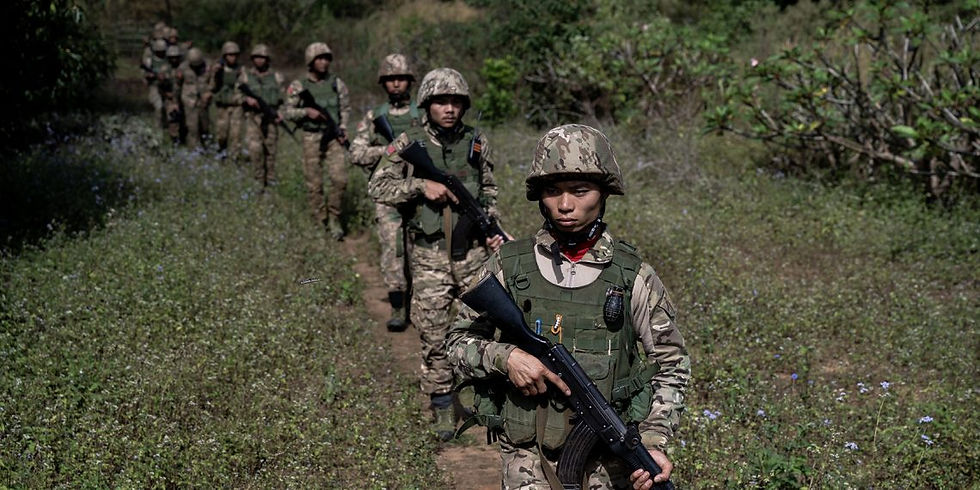
or nearly 80 years Myanmar’s civil war—one of the world’s longest-running conflicts—was characterized by a seemingly unbreakable stalemate. Well-equipped and battle-hardened ethnic armed groups (EAOs) fought lengthy, intense campaigns for autonomy from their mountainous and forested border regions, but despite operating some of the most capable non-state armies in Asia, they remained geographically and strategically isolated. They were unable to extend their influence into the Bamar-majority central dry zone—or Anyar—the traditional stronghold of the military; they simply could not win.
The obstacle was chiefly logistical: moving out of the jungle canopy meant extending paltry supply lines across hostile, open terrain; walking blindly into a widespread military intelligence network without their own local informants; and facing devastating airstrikes without the cover of the borderlands.
Then came the morning of Feb. 1, 2021. When Min Aung Hlaing and his military seized power, nullifying a democratic election and violently suppressing the peaceful protests that followed, they inadvertently blew away their own strategic advantage. The regime’s brutal crackdown shattered any remaining illusion of the military as a protector of the Bamar majority. This sparked the Spring Revolution, inspiring a new generation of young people to take up arms and organically form the People’s Defense Forces (PDFs).


Comments