
Asia Centre says Buddhist fundamentalism fuels post-coup crackdown on gender rights in Myanmar
- Jun 4
- 3 min read
Mizzima
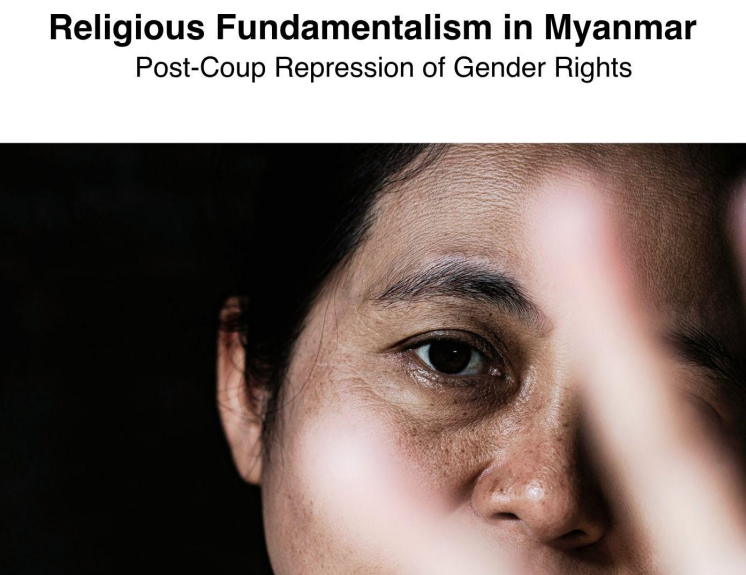
Buddhist fundamentalism, which refers to a strict interpretation and enforcement of Buddhist teachings and practices, has become an important pillar of repression in post-coup Myanmar. It helps justify legal persecution, online harassment, and physical violence against women, gender, and sexual minority (WGSM) rights advocates, a group that includes individuals who advocate for the rights of women and people with diverse gender identities and sexual orientations. This is according to a report released by the Asia Centre on 3 June.
The report, Religious Fundamentalism in Myanmar: Post-Coup Repression of Gender Rights, argues that the 2021 military coup strengthened ties between the junta and Buddhist nationalist actors. It also states that this alliance increasingly targets activists who advocate for women’s rights and gender and sexual diversity, creating a hostile environment.
The Bangkok-based think tank said Buddhist fundamentalism is rooted in decades of state-backed policies of Burmanisation and Buddhisation, and has re-emerged as a central ideological force under military rule. According to the report, military-aligned actors increasingly portray WGSM advocacy as a threat to Buddhist morality, national culture, and social stability.
The report notes that Buddhist nationalist networks that gained prominence during Myanmar’s political opening in the 2010s have remained influential despite official crackdowns. It identifies the 969 Movement and Ma Ba Tha as key actors in promoting narratives that link Buddhism, nationalism, and social conservatism. While Ma Ba Tha was formally banned under the National League for Democracy government, the report says many of its networks and prominent figures continued to disseminate fundamentalist messaging through social media and later re-emerged after the 2021 coup.
To illustrate the consequences of this dynamic, the report identifies three main forms of repression.
First, it says the junta weaponises laws to criminalise activism and expand surveillance. For example, LGBTQ activist Justin Min Hein was sentenced to ten years in prison in 2023 under Myanmar’s Counter-Terrorism Law. The report calls this conviction widely viewed as retaliation for his efforts to challenge LGBTQ detainee mistreatment.
The report also highlights that authorities gave prominent gender and sexual minority activist Sue Sha Shin Thant a 22-year prison sentence in 2022 under anti-terrorism provisions for her opposition to military rule.
Researchers further point to the continued use of Section 377 of Myanmar’s Penal Code, a colonial-era provision criminalising same-sex relations. Activists say authorities often use it as a tool of intimidation during arrests, interrogations, and surveillance operations.
The report argues that digital spaces have become another major battleground, as pro-military and Buddhist fundamentalist actors use social media to spread hate speech, conduct doxxing campaigns, and incite violence against rights advocates. At the same time, the military has expanded AI-enabled surveillance systems.
Physical violence remains widespread, according to the report, and activists face arbitrary arrests, intimidation, assault, and sexualised violence by security forces and military-aligned groups. These attacks are frequently framed as efforts to defend religion, morality, and social order.
The report also cites legal action initiated in 2023 against the director and cast of Don’t Expect Anything, a film that challenges traditional gender roles and examines how women are treated in Buddhist culture. Authorities accused them of insulting Buddhism under Section 295 of the Penal Code.
Despite growing pressure, WGSM organisations continue to operate through informal networks, encrypted communications, emergency relocation systems, and cross-border support mechanisms. Yet the report warns these efforts remain under-resourced as international funding for democracy- and rights-based work has declined.
Asia Centre concludes that religious fundamentalism, military authoritarianism, and gender-based repression have become increasingly intertwined since the coup. Consequently, the Centre calls on international donors, UN agencies, civil society organisations, and Myanmar’s democratic opposition to strengthen protection mechanisms for WGSM defenders and challenge narratives used to justify discrimination and violence.


Comments