
Myanmar junta airstrikes kill 163 civilians in September, Arakan hardest hit: MDSI
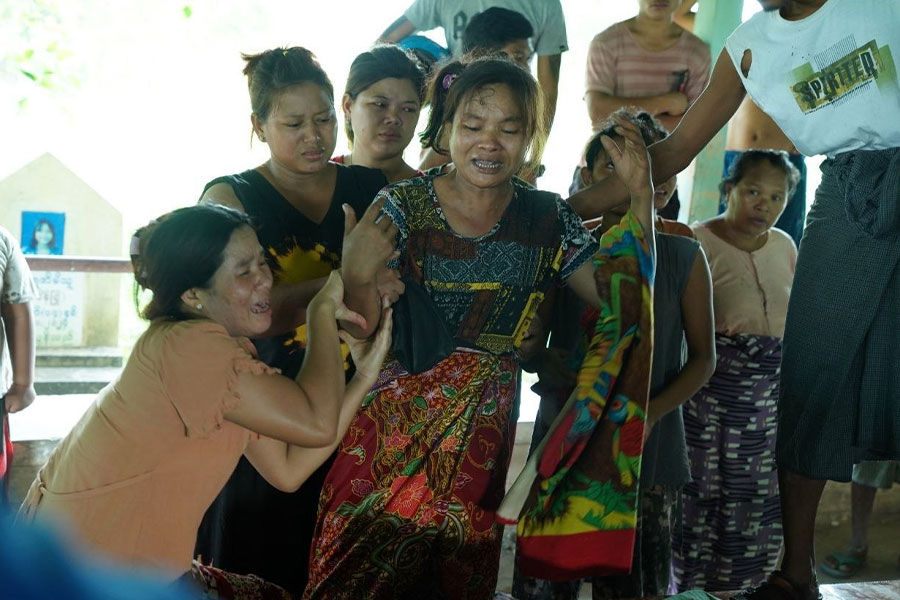
Myanmar's military regime carried out 173 aerial attack incidents involving approximately 640 bombing attacks nationwide in September 2026, killing 163 civilians and injuring 248 others, according to a report by the Myanmar Defense & Security Institute (MDSI).
DMG Newsroom
14 October 2026, Yangon
Myanmar's military regime carried out 173 aerial attack incidents involving approximately 640 bombing attacks nationwide in September 2026, killing 163 civilians and injuring 248 others, according to a report by the Myanmar Defense & Security Institute (MDSI).
The institute's September air warfare report identified Arakan (Rakhine) State in western Myanmar as the most frequently targeted area by the number of aerial attack incidents.
Arakan recorded 51 incidents involving 136 bombing attacks, accounting for nearly 30 percent of the nationwide incident total. The attacks killed 61 civilians and injured 81 others, according to the report.
Karenni (Kayah) State experienced the highest concentration of individual bombing attacks, with 231 attacks across 21 incidents, representing approximately 36 percent of the nationwide bombing total.
Sagaing Region recorded 28 aerial attack incidents, while Magway Region reported 16, highlighting the military's continued reliance on air power across conflict-affected areas.
MDSI documented attacks affecting residential neighborhoods, villages, schools, religious buildings, healthcare facilities and camps sheltering internally displaced people.
The report also highlighted repeated strikes on the same locations and the military's use of suicide drones and loitering munitions alongside conventional aircraft.
According to MDSI, the military deployed fighter jets, transport aircraft, attack helicopters and drones, using various types of aerial munitions. The institute also reported the use of cluster bombs in some attacks.
The report found that aerial operations had become increasingly intensive, with multiple aircraft and weapons systems employed in bombing campaigns.
MDSI said its assessment was based on open-source intelligence and documented incident reports, with information classified according to high, medium and low confidence levels.
The findings come amid intensified fighting between Myanmar's military and the Arakan Army (AA), an ethnic armed organization that controls large parts of Arakan State.
The institute warned that continued aerial attacks on populated areas could cause further civilian casualties, displacement and destruction of essential infrastructure.
DMG could not independently verify all the incidents and casualty figures documented in the report.


Comments