
Coercion and intimidation cloud first day of Myanmar’s phased election
- Dec 28, 2025
- 2 min read
Mizzima
Polling stations across Myanmar’s capital opened at 6 am on Sunday under heavy security, marking the start of a three-phase general election that has been widely dismissed by critics and international observers as a facade for continued military rule.
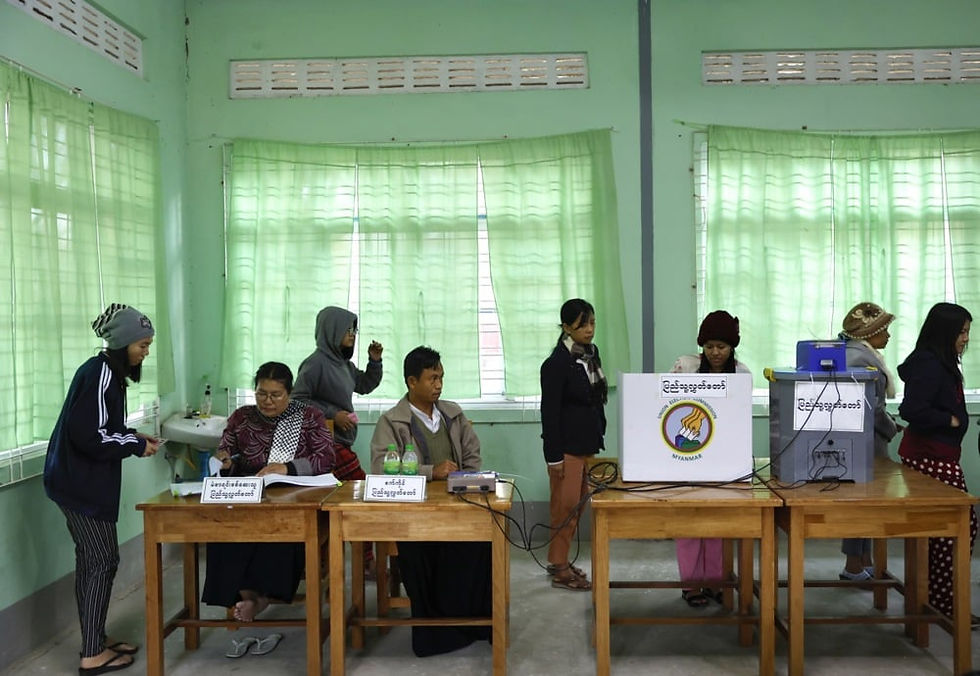
While the junta-appointed Union Election Commission (UEC) sought to project an image of orderly participation, reports from the ground in Naypyidaw suggested a climate of fear and forced compliance. In the capital’s Zabuthiri and Pyinmana townships, queues of approximately 150 to 200 people were observed at some polling sites by mid-morning, though many other stations remained largely empty with fewer than 100 voters recorded.
Residents in the administrative heart of the country described being pressured by local officials and neighbourhood administrators to participate.
One resident of Zabuthiri township said he only went to the polls after neighbours warned that the military would take action against those who abstained. “I don’t even know who I’m supposed to vote for,” another voter said, expressing a sense of powerlessness. “Since my name is on the voter list, I don’t dare skip it. I have no will of my own in this.”
This pressure reportedly extended to the civil service. Public personnel told Mizzima that department officials issued stern warnings in the days leading up to the vote, ordering staff to confirm they had cast ballots. Those who failed to do so were told they would be left to “solve their own problems,” a common euphemism for facing administrative or legal repercussions.
Security was notably tight throughout the capital. Polling stations were guarded by a visible presence of police, firefighters, and military personnel. Observers also noted the deployment of plainclothes individuals acting as unofficial security guards.
Despite the heavy presence of the military-proxy Union Solidarity and Development Party (USDP) and several smaller factions, some voters admitted they were confused by the ballot, which for the first time utilized a Mixed Member Proportional system and electronic voting machines.
One woman said she cast her vote for a party with an owl logo simply because she believed it was connected to the detained leader Aung San Suu Kyi, despite the NLD’s official boycott of the “sham” process.


Comments